EGPC Weatherford agreement to revive 100 idle oil wells
The EGPC Weatherford agreement will use AI and rigless intervention to bring about 100 idle Egyptian oil wells back into production within 18 months.
 Layla Al Mansoori
◆23 November 2026
◆3 min read
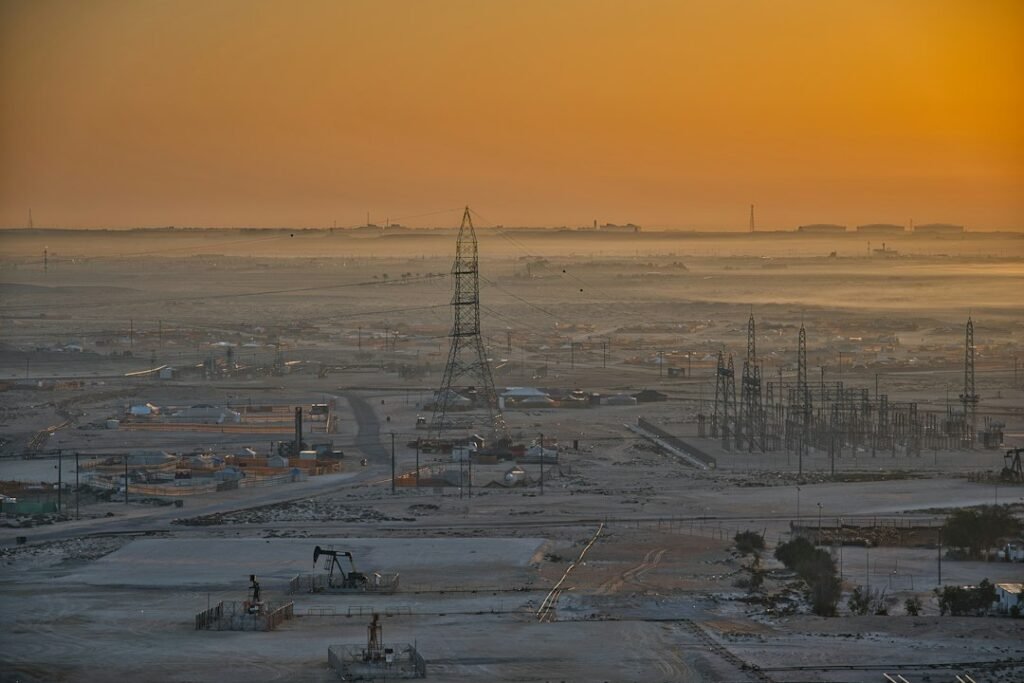
Egyptian General Petroleum Corporation (EGPC) has signed a framework agreement with US oilfield services company Weatherford to return around 100 idle oil wells to production within 18 months, the petroleum ministry said in a statement.
The EGPC Weatherford agreement covers onshore and offshore production areas across Egypt and forms part of the ministry’s five-year plan to raise oil and gas output through the end of the 2029/2030 fiscal year. Karim Badawi, Minister of Petroleum and Mineral Resources, witnessed the signing, according to the ministry’s statement.
How the EGPC Weatherford agreement will work
Under the programme, artificial intelligence will be used to analyse data from the shut-in wells, assess their potential to resume production and select the most suitable technology for each one. Weatherford will then carry out well interventions without the need for drilling rigs, the ministry said.
Rigless intervention is intended to cut time and cost, improve operational efficiency and bring wells back online faster. The ministry attached no production volume or contract value to the programme, and the statement did not break down how many of the wells are offshore.
Badawi said modern technologies and AI open new opportunities to increase output from existing resources. He added that many idle wells could return to service once technical problems or ageing infrastructure are addressed, and that the government will pursue every opportunity to lift domestic production regardless of the size of the added volumes.
Why Egypt wants its idle wells back
Reviving shut-in wells would maximise returns on existing investments and infrastructure, and the cumulative production gains would help reduce Egypt’s oil import bill, the minister said. Egypt’s oil production has slipped in recent years, so the country has imported crude and refined products to meet demand, making the energy import bill a persistent drain on foreign currency.
The deal is the second 18-month agreement with an international service company this month. On 12 November, Halliburton agreed to design a 50-well hydraulic fracturing programme in General Petroleum Company’s Western Desert fields, according to EnterpriseAM, with studies first and drilling to follow only if the results justify it.
Girish Saligram, Weatherford’s chairman and chief executive, said only two weeks had passed between initial talks with the minister on the sidelines of ADIPEC in Abu Dhabi and the signing. Speaking by video conference, he said the company was eager to begin implementation, according to the Egyptian Gazette.
What it means for Egypt’s energy investors
For oilfield service companies, the agreement signals that Egypt is prepared to move quickly on brownfield work that needs little upfront capital. It also follows a wider push to attract international partners: Badawi announced a broad reshuffle of senior roles across the ministry, EGPC and EGAS on 17 November, and has directed sector leaders to draw up five-year action plans.
Egypt’s gas picture has improved recently. Shell started production from the Mina West field on 15 November at an estimated 160 million cubic feet per day, and Saipem won drilling work for Burullus Gas starting in the first quarter of 2027, EnterpriseAM reported. Idle-well reactivation is one of the quicker routes to adding crude volumes alongside those gas projects.
The country’s broader economic position has also steadied, with urban inflation easing to a nine-month low of 12.7%. Lower energy import costs would further support the current account.
Also Read: Dana Gas Q3 profit up 50%, nine-month earnings hit AED558m
The ministry did not give a start date for the first interventions under the EGPC Weatherford agreement. With an 18-month window, the programme would run to roughly mid-2028 if work begins promptly, and progress updates are likely to come through the ministry and EGPC. Investors will watch whether the AI-led screening produces a measurable lift in output, and whether EGPC extends the model to further wells. Outlook Middle East will follow the programme alongside other MENA business news.