IMF UAE growth forecast: 0.2% in 2026, 7.3% in 2027
IMF UAE growth forecast lifted to 0.2% for 2026 and 7.3% for 2027 as oil output recovers; inflation seen near 5% this year, the Article IV mission says.
 Layla Al Mansoori
◆20 November 2026
◆4 min read
The International Monetary Fund expects the UAE economy to grow 0.2 per cent in 2026 and 7.3 per cent in 2027, it said in a statement issued on 18 November at the end of its Article IV mission.
The new IMF UAE growth forecast is a sharp upgrade from the Fund’s October World Economic Outlook, which had pencilled in a 3.9 per cent contraction for this year. The 2027 estimate is slightly below the 7.7 per cent projected previously.
A staff team led by Said Bakhache, the IMF’s mission chief for the UAE, visited the country from 3 to 17 November. The Fund said activity had begun to recover after disruptions linked to the regional conflict hit hydrocarbon production and key non-hydrocarbon sectors in the second quarter.
What is behind the IMF UAE growth forecast
Hydrocarbon output is projected to expand 2.3 per cent in 2026 and 13.3 per cent in 2027 as oil production recovers. The non-hydrocarbon economy is expected to shrink 0.5 per cent this year before growing 5.4 per cent next year, the Fund said.
“The UAE economy has demonstrated strong resilience to regional disruptions,” Bakhache said in the statement. The Fund credited substantial public-sector and external buffers, a well-capitalised banking system and targeted fiscal and financial-sector measures with cushioning the impact.
Indicators for trade, aviation and tourism point to a gradual recovery, the IMF added. The 2027 rebound assumes that the regional disruptions are lifted.
Inflation, fiscal position and reserves
Inflation is projected to average about 5 per cent in 2026 before easing to about 3 per cent in 2027 and converging towards 2 per cent over the medium term.
The general government surplus is expected to fall to close to balance in 2026 before recovering in 2027. The current account surplus will narrow markedly this year because of temporary disruptions to trade and travel, partly offset by recovering oil shipments. International reserves should remain at about seven months of imports, the Fund said.
The IMF described the temporary fiscal easing in 2026, together with support from government-related entities, as appropriate given the scale of the shock. It urged the authorities to keep support transparent and targeted, to strengthen federal-emirate coordination on fiscal policy and to monitor contingent liabilities linked to government-related entities and public-private partnerships.
Banks, property and the risks ahead
The financial system remains resilient, with substantial capital and liquidity buffers and improving asset quality, the mission found. Given elevated inflation and strong credit growth, it called for close monitoring of liquidity, funding conditions and sectoral exposures, and for temporary support measures to be phased out as conditions normalise.
Real estate activity has moderated from earlier peaks, with conditions varying across emirates and market segments, and the Fund called for continued close monitoring of the sector.
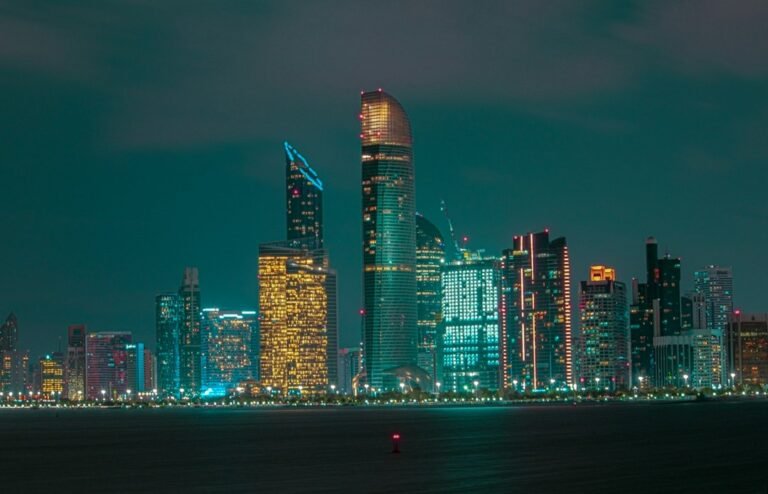
The Central Bank of the UAE led the UAE side of the consultations, and Governor Khaled Mohamed Balama chaired the concluding meeting in Abu Dhabi, state news agency WAM reported. Total banking assets exceeded AED5.8 trillion (about $1.58 trillion) at the end of the third quarter, the central bank said.
The IMF UAE growth outlook remains subject to significant uncertainty, the Fund said. The main downside risk is an escalation of regional tensions that disrupts trade, tourism and supply chains, which could delay the recovery. The IMF also flagged global financial volatility and cybersecurity. On the upside, faster normalisation of the conflict and productivity gains, including from artificial intelligence, could lift growth.
What happens next
The IMF UAE growth projections broadly align with Fitch Ratings’ decision last week to affirm the UAE at AA- while forecasting 0.5 per cent real growth this year. Recent data have also shown non-oil trade approaching AED3 trillion in the first nine months, up 10.1 per cent.
The Fund recommended that policy priorities shift from cushioning the shock towards medium-term resilience: deeper trade integration through Comprehensive Economic Partnership Agreements, alternative trade corridors, further development of the Dirham Monetary Framework and safeguards around AI adoption. End-of-mission findings are preliminary and are normally followed by a staff report to the IMF Executive Board. The full statement is available on the IMF website.