Top 10 Global Leaders Shaping the Future in 2026
Ten founders and CEOs from India, Africa, Europe, the Americas and Asia who made headlines in 2026, from space and fintech to climate, health and school meals.
 Layla Al Mansoori
◆18 October 2026
◆9 min read
Layla Al Mansoori
◆18 October 2026
◆9 min read
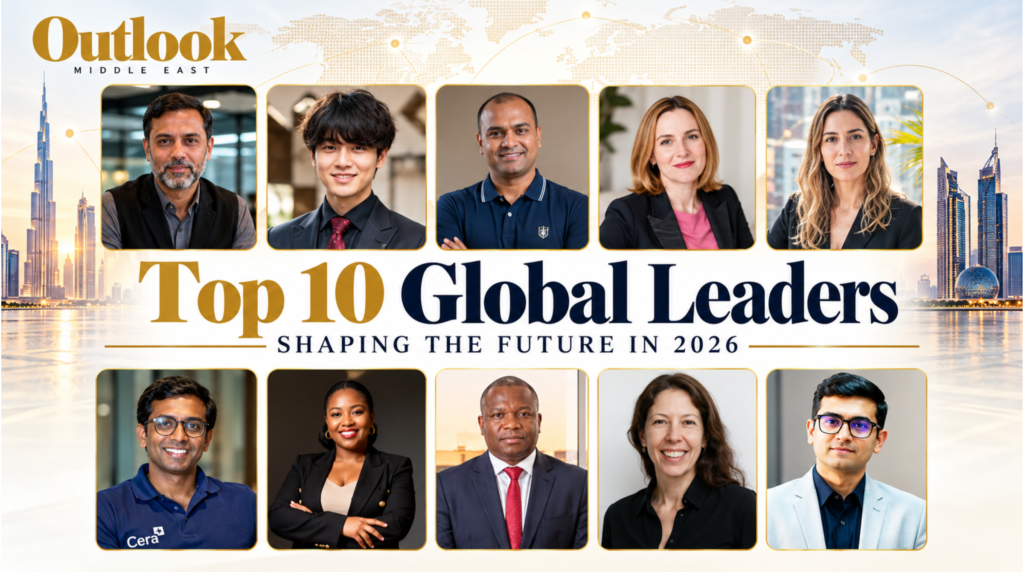
The leaders shaping the future rarely look like the ones on last year’s covers. In 2026 they are launching hyperspectral satellites from Bengaluru, feeding 600,000 Kenyan schoolchildren a day, building Europe’s answer to the SpaceX capsule, and financing solar installers in 50 countries from an office in Colorado. They are founders in their thirties and forties who have spent a decade building quietly and who, in the last eighteen months, closed the round, won the award or crossed the threshold that put them in the news.
This article presents ten of them, drawn from India, Nigeria, Kenya, Germany, the United Kingdom, Chile, the United States, Japan and Singapore. Their sectors range from space and fintech to climate, health and agriculture. What unites them is a willingness to take on problems at national scale and the discipline to see them through. Their stories are a reminder that leadership, in 2026, is measured in outcomes rather than headlines.
Meet the founders and executives whose work is redefining what is possible in their industries and their countries.
1. Awais Ahmed: A Health Monitor for the Planet
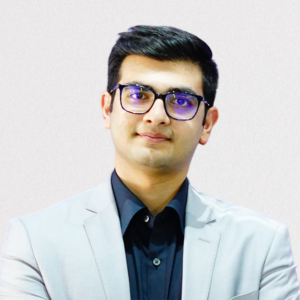
Awais Ahmed co-founded Pixxel in February 2019 with Kshitij Khandelwal while the two were still students at BITS Pilani. The Bengaluru company builds hyperspectral imaging satellites that see what conventional cameras cannot: crop disease before it is visible, methane leaks, mineral deposits and water quality. Six of its Firefly satellites are in orbit, and its next constellation, Honeybee, is due to launch in 2027.
In September 2026, Pixxel closed a USD 100 million Series C co-led by Temasek and Seraphim Space, with 360 ONE Asset, IMM Investment, Radical Ventures and growX Ventures, the largest round ever raised by an Indian space-technology company. Total funding now stands at USD 195 million. Pixxel’s customers include NASA and the US National Reconnaissance Office, and a consortium it leads was selected by IN-SPACe to build a 12-satellite national constellation for India.
Ahmed, recognised among MIT Technology Review’s Innovators Under 35 and the World Economic Forum’s Technology Pioneers, has said the company set out years ago to build a health monitor for the planet. With a US base in California and a growing government order book, that monitor is now switched on.
2. Hélène Huby: Europe’s Reusable Spacecraft

Hélène Huby studied at the École normale supérieure and ENA, worked at Airbus Defence & Space and ArianeGroup, and served as vice president for the service module of NASA’s Orion spacecraft before founding The Exploration Company in 2021. The company is building Nyx, a reusable cargo capsule, and the Storm reusable engine, with a demonstration mission to dock with and return from the International Space Station targeted for 2028.
In September 2026, The Exploration Company raised a USD 450 million Series C co-led by Bessemer, Atomico and the Scaleup Europe Fund, with Balderton, Plural, Cherry and Red River West participating. Total funding is around USD 680 million, the largest Series C in European space history, and the company reports more than USD 2 billion in contracts and commitments, including from ESA and a NASA Space Act Agreement. It employs more than 550 people across Europe, the United States and the UAE.
Huby has said the financing allows the company to execute with urgency. For a continent that has watched American companies dominate orbital logistics, she is leading Europe’s most serious attempt to compete.
3. Tosin Eniolorunda: One Billion Transactions a Month
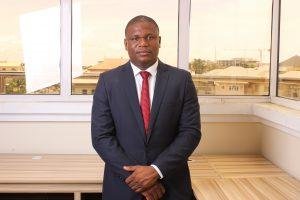
Tosin Eniolorunda wrote the first point-of-sale software for Interswitch before co-founding TeamApt in Nigeria in 2015 with Felix Ike. The company, now Moniepoint, has grown into one of Africa’s largest payments and banking platforms, processing more than one billion transactions a month and over USD 22 billion in payments volume, and it expanded into the United Kingdom in 2024.
In October 2025, Moniepoint closed a USD 90 million extension to its Series C, taking the round to USD 200 million with investors including Visa, DPI, LeapFrog and Google’s Africa Investment Fund, at a valuation above USD 1 billion. In September 2026, TIME named Eniolorunda to its TIME100 Next list of emerging leaders.
Eniolorunda has described Visa’s backing as a strong endorsement of the company’s vision to digitise and support African businesses at scale. Moniepoint is well known on the continent, but 2026 was the year the rest of the world took notice.
4. Wawira Njiru: Feeding a Continent’s Future

Wawira Njiru started Food4Education in 2012 with 25 children in Ruiru, Kenya. Today the organisation serves more than 600,000 meals every school day at around 30 US cents per child, from 30 centralised kitchens, 17 of them co-owned with county governments. Its Giga Kitchen in Nairobi alone can produce more than 60,000 meals a day, and the organisation has served over 150 million meals since launch.
Njiru’s model, which treats school feeding as infrastructure rather than charity, has earned a Skoll Award, recognition as a Bloomberg New Economy Catalyst and a CNBC Changemaker, and a place on TIME’s list of the 100 Most Influential Companies in 2024. In September 2026, she was named to the TIME100 Next list. Food4Education is expanding into Zambia, with Rwanda and Ethiopia in discussion, and aims to reach three million children by 2030.
Her guiding principle is that charity may feed for a day, but systems feed for generations. Few leaders anywhere have built a system that feeds so many for so little.
5. Ben Maruthappu: Taking Pressure Off the NHS

Dr. Ben Maruthappu MBE studied at Cambridge, Oxford and Harvard, where he was a Kennedy Scholar, before founding Cera in London in 2016. The company delivers technology-enabled home care across the United Kingdom, working with more than 150 local authorities and around two-thirds of NHS Integrated Care Systems, and says its predictive tools cut hospitalisations by as much as 70 percent.
Cera raised USD 150 million in January 2025, led by BDT & MSD Partners and Schroders Capital, taking total capital past USD 400 million. In October 2025, Maruthappu was named a Bloomberg New Economy Catalyst, and in November Cera acquired Care at Home Services, adding around 5,500 service users and more than 2,100 carers in what was described as the UK’s largest home-care acquisition of the year. He was EY UK Entrepreneur of the Year in 2024.
Maruthappu has said Cera is taking pressure off the NHS and giving it capacity to look after other patients. In an ageing country with a strained health service, that is a mission with a very long runway.
6. Cristina Etcheberry: Latin America’s Largest Woman-Led Series A

Cristina Etcheberry, a commercial engineer from Universidad Católica de Chile, co-founded Toku in 2020 with Francisca Noguera and Enzo Tamburini to automate accounts receivable and payments for large companies. The platform processes around USD 8 billion a year for more than 500 corporate clients including Chevrolet, Zurich and MetLife, across Chile, Mexico and Brazil.
In April 2025, Toku raised a USD 48 million Series A led by Oak HC/FT, with Gradient Ventures, F-Prime, Clocktower, Y Combinator and Honey Island, billed as the largest Series A ever led by a woman in Latin America. In March 2026 it launched an AI collections agent that works across WhatsApp, email and voice, and in September 2026 TIME named Etcheberry to its TIME100 Next list.
Now based in Mexico City, Etcheberry has said the recognition is the fruit of the whole Toku team’s effort. Her company is building the financial plumbing for a region whose corporate payments still run largely on manual work.
7. Emily McAteer: Financing the Distributed Energy Revolution
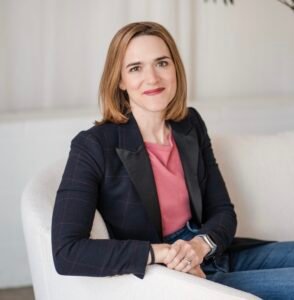
Emily McAteer holds degrees from Brown, the Harvard Kennedy School and Stanford Graduate School of Business, was a Fulbright scholar in India, and served as chief revenue officer at SunEdison’s Frontier Power before launching Odyssey Energy Solutions from Boulder, Colorado, in 2017. Odyssey connects more than 6,000 solar and storage installers in over 50 countries with lenders and suppliers, and has facilitated around USD 3.6 billion in distributed-energy capital.
In September 2026, Odyssey raised USD 74 million, comprising USD 27 million in equity from investors including Broadscale, FMO, Al Mada Ventures and Union Square Ventures, and USD 47 million in debt from BII, BIO and others. Its procurement marketplace, launched in 2024, has unlocked around 1.5 gigawatts of capacity, with India growing more than 200 percent in a year. McAteer was named a Bloomberg New Economy Catalyst in October 2025.
She has argued that distributed energy is the solution for low-cost, reliable power in emerging markets. Odyssey is the financial infrastructure making that argument real.
8. Ravi Ramachandran: Women’s Wellness at Scale
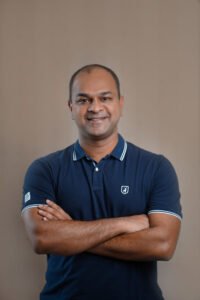
Ravi Ramachandran co-founded Nua in Mumbai in 2017 with Abhishek Ramanathan to build a women’s wellness brand around period care, maternity care and intimate care, supported by a period-tracking app. The company says it reaches more than three million women and girls a month and has reached a revenue run rate of INR 100 crore while remaining profitable, with a target of INR 500 crore within two years.
In September 2026, Nua closed a USD 50 million Series C led by Peak XV and Filter Capital, with Mirabilis and Footpath participating, taking total funding past USD 65 million. The round also allowed early backers Kae Capital and Lightbox to realise part of their investment.
Ramachandran has said that since inception the company has sought to address neglected needs in women’s wellness with better products. In a category long dominated by multinationals, Nua is India’s leading homegrown challenger.
9. Yuki Noro: Japan’s Profitable AI Builder

Yuki Noro founded AKARI in February 2021 as a spinout from the University of Tokyo’s Matsuo Lab, after working as an AI engineer on projects for listed companies at the Matsuo Institute. AKARI builds corporate digital-transformation services and Digital Billder, a platform for construction back-office work, and has been profitable since its founding.
In January 2026, Mitsubishi Electric invested JPY 5 billion, around USD 32 million, in AKARI at a valuation of JPY 100 billion, the company’s first large external fundraise. The two are co-developing an industrial operating system and embodied AI, with AKARI expanding into manufacturing, logistics and retail. In May 2026, Forbes named Noro to its 30 Under 30 Asia list.
AKARI stands out in a global AI market defined by cash burn: a young company that reached a nine-figure valuation while making money from the start.
10. Dhruv Sawhney: Rice That Emits Less
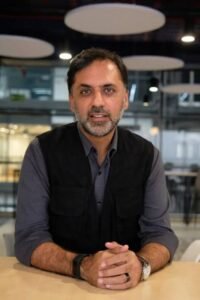
Dhruv Sawhney founded WOTU, acquired by Zomato in 2018 and renamed Hyperpure, and led Nuture.Farm before becoming co-founder and chief executive of Rize, a Singapore-based venture formed by Temasek, Breakthrough Energy Ventures and GenZero. Rize works with smallholder rice farmers to cut methane emissions and water use, and now supports 17,000 farmers across 50,000 hectares in Vietnam and Indonesia.
In July 2026, Rize raised a USD 31 million Series B, comprising USD 20 million in equity led by BNP Paribas Asset Management with the Rockefeller Foundation, Temasek and Breakthrough Energy, and USD 11 million in debt from UOB, BIDV and Temasek Foundation. Total funding is USD 47 million. The company has shipped 1,500 tonnes of low-emission rice to Europe, Canada, Australia and Singapore, with India next, and aims to reach 150,000 farmers and 300,000 hectares by 2030.
Sawhney has called the round more than just a funding milestone. Rice feeds half the world and produces a tenth of its methane; Rize is one of the few companies working on both facts at once.
Conclusion
The ten leaders in this article are launching satellites, feeding children, financing solar installers, automating payments and reinventing how rice is grown, from Bengaluru to Boulder and Nairobi to Munich. Most closed landmark funding rounds or earned recognition from TIME and Bloomberg in the past year, and all are still early in what they are building. Their work shows that the future is not being shaped in one place or one industry, but by determined founders solving hard problems wherever they find them.