Islam Al Bayaa Takes Charge as CEO of KPMG Middle East
Islam Al Bayaa has assumed the role of CEO of KPMG Middle East, leading 5,000+ professionals across six markets from October 1, 2026.
 Khushboo Singh
◆15 October 2026
◆4 min read
Khushboo Singh
◆15 October 2026
◆4 min read
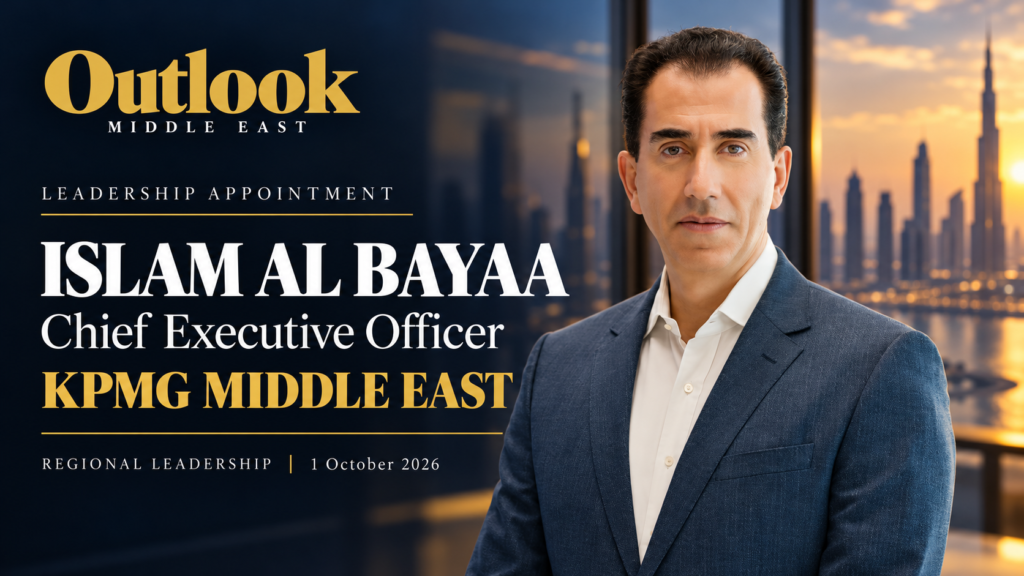
Dubai/Riyadh: Islam Ahmad Al Bayaa has assumed the role of Chief Executive Officer of KPMG Middle East, effective October 1, 2026, taking responsibility for a regional organisation spanning six countries.
His appointment was announced on May 15 following an independent selection process supported by external advisers and concluded through a partner vote. He succeeds Dr Abdullah Al Fozan, whose term ended on September 30.
The transition places an executive with extensive advisory, transactions and investment banking experience at the centre of the firm’s regional strategy. It also comes with an emphasis on bringing expertise together across markets and supporting clients whose operations extend beyond a single country.
More Than Three Decades of Experience
Al Bayaa began his career with KPMG in the United Kingdom before spending more than a decade working in investment banking in London. He returned to KPMG in Saudi Arabia in January 2009.
Before becoming CEO, he served as Head of Advisory for KPMG Middle East. At the time his appointment was announced, he led more than 2,400 professionals and 100 partners.
His experience includes enterprise transformation, transactions, cross-border growth and work with governments, sovereign entities and institutional clients. He had also served on the firm’s executive committee for 13 years when the appointment was announced.
That background gives him experience of both client-facing services and the internal leadership requirements of a large professional services business.
A Regional Mandate Across Six Markets
As CEO, Al Bayaa leads KPMG Middle East across Saudi Arabia, the UAE, Oman, Jordan, Lebanon and Iraq. The business comprises more than 5,000 professionals across ten offices.
Coverage of his assumption of office identified several priorities: strengthening collaboration between regional businesses, supporting clients operating in multiple markets and developing capabilities in technology, artificial intelligence, governance and cross-border growth.
Al Bayaa has also emphasised investment in people and closer coordination across the organisation. These priorities position the leadership transition around how the firm works across its markets, as well as the services it offers clients.
Saudi Leadership Appointment Supports the Structure
Alongside the regional transition, KPMG appointed Khalil Al Sedais as Country Leader for Saudi Arabia. His responsibilities include clients, people, growth and the continued development of the firm’s capabilities in the Kingdom.
Al Sedais brings more than 22 years of audit and advisory experience. He has served as Regional Managing Partner for Riyadh since 2013, is a board member of KPMG Middle East and chairs its Advisory Quality and Nationalization Committees.
The two appointments establish complementary levels of responsibility: regional leadership under Al Bayaa and country-level oversight in Saudi Arabia under Al Sedais.
From an organisational perspective, the effectiveness of this structure will depend on clear decision-making and the ability to combine local knowledge with specialist expertise from across the firm.
Why Regional Coordination Matters
For a company operating in several countries, business decisions rarely remain confined to one function. An acquisition, for example, can raise questions about governance, financial reporting, tax, technology integration and workforce planning.
A professional services firm’s ability to coordinate these disciplines can influence the usefulness of its advice. Clients may need teams that understand local requirements while maintaining a consistent view of the wider business objective.
This provides an analytical explanation for Al Bayaa’s emphasis on collaboration. A larger regional footprint creates potential advantages, but the benefits depend on how easily teams share expertise, allocate resources and maintain service quality.
The challenge is managerial as much as commercial. Strong individual practices do not automatically operate as a cohesive regional organisation.
Technology and Talent Will Shape Execution
Technology and artificial intelligence are among the capabilities highlighted for development under the new leadership.
For a professional services organisation, building these capabilities involves more than introducing software. Staff need the knowledge to assess outputs, recognise limitations and connect technical tools with the client’s business requirements.
Governance is equally important. Faster analysis has limited value if the underlying information is unreliable or responsibility for decisions becomes unclear.
These are practical considerations for evaluating the firm’s stated direction, rather than evidence of specific programmes that have not been announced. They illustrate why investment in technology and investment in people need to progress together.
What Will Define the New CEO’s Impact
Al Bayaa’s performance will ultimately be reflected in how effectively the organisation serves clients, develops talent and maintains quality while pursuing growth.
For employees, the transition will matter through opportunities to build skills and work across disciplines or markets. For clients, the relevant measure will be whether regional coordination produces more consistent and useful service.
The appointment gives KPMG Middle East a leader with longstanding institutional knowledge and a substantial advisory background. Its impact will depend on translating that experience into a regional operating approach that combines local expertise, specialist capabilities and clear accountability.