TASNEE Appoints Fahad Al Mishal as Chief Executive Officer
TASNEE has appointed petrochemicals veteran Fahad Al Mishal as CEO from October 1, 2026, as the Saudi group sharpens its portfolio.
 Khushboo Singh
◆15 October 2026
◆4 min read
Khushboo Singh
◆15 October 2026
◆4 min read
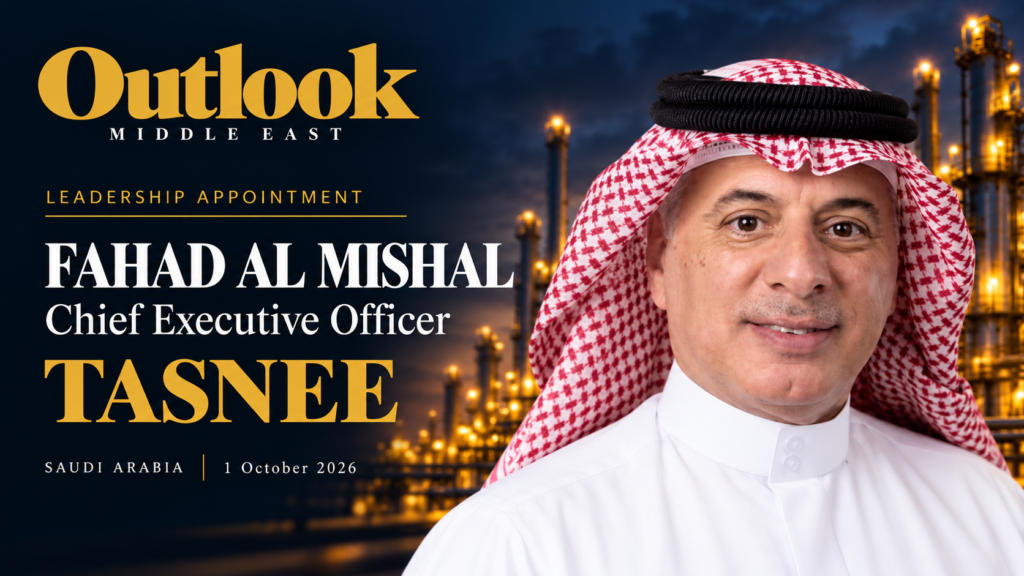
Riyadh, Saudi Arabia: National Industrialization Company, widely known as TASNEE, has appointed Fahad bin Abdulrahman Al Mishal as Chief Executive Officer, effective October 1, 2026. The leadership change places an experienced petrochemicals executive at the helm of the Saudi industrial group during a period of portfolio adjustment and financial pressure.
Al Mishal succeeds Fawaz bin Mohammed Al Fawaz, whose retirement from the chief executive position took effect on September 30. The appointment was announced in August, allowing a transition period before the new CEO assumed responsibility. Al Fawaz will continue serving on TASNEE’s board for the remainder of its current term.
An Executive With Extensive Petrochemical Experience
Al Mishal brings more than three decades of experience in the petrochemicals industry. His professional background spans financial management, administration, marketing and senior corporate leadership—disciplines that are closely connected in an industry where operating performance and capital allocation can significantly influence profitability.
His earlier positions include Executive Vice President for Finance, Administration and Marketing at Advanced Petrochemical Company. He also entered the CEO position as an existing TASNEE board member, giving him prior exposure to the group’s governance, business portfolio and strategic priorities.
His responsibilities have extended to board and chairmanship positions across several petrochemical businesses. This experience provides a foundation for managing relationships between operating companies, joint ventures and shareholders within a diversified industrial organisation.
A Transition Against a Challenging Financial Backdrop
The appointment comes at a consequential time for TASNEE. The company reported a net loss of approximately SAR 889.1 million for the first half of 2026, compared with a net profit of approximately SAR 830 million in the corresponding period of 2025. Its second-quarter net loss stood at SAR 547.8 million.
In its first-half results commentary, management identified several priorities: strengthening the company’s focus on petrochemicals, improving its asset portfolio, preserving liquidity, accelerating debt reduction and generating sustainable shareholder returns.
The company’s regulatory disclosures also described the idling of Furnace One at the Ilmenite Titanium Smelter Complex in Jazan, owned by its subsidiary Advanced Smelting Industries Company. TASNEE stated that it continued evaluating strategic alternatives in line with its wider financial and portfolio objectives.
These developments make the leadership change more significant than a routine executive succession. The new CEO takes responsibility for a business already making decisions about where to concentrate resources and how to improve the relationship between its industrial assets and financial performance.
Why the Appointment Matters
From a business perspective, Al Mishal’s combination of financial and commercial experience appears relevant to the circumstances facing TASNEE. Industrial leadership requires decisions about production, pricing, working capital, maintenance and investment to be assessed together.
For example, increasing production does not automatically improve shareholder returns if selling prices are weak or additional output absorbs too much cash. Similarly, reducing expenditure can protect liquidity in the short term but create longer-term problems if essential maintenance or commercially valuable investments are deferred.
This is an analytical assessment of the role, rather than a claim that Al Mishal has announced a particular operational programme. The appointment announcement establishes the leadership change; the company’s financial disclosures provide the context in which his performance will be assessed.
His existing board experience could support continuity. However, familiarity with the company does not remove the challenge of converting strategic priorities into measurable improvements across its businesses.
Balancing Portfolio Decisions and Operational Delivery
For investors, the important question will be how TASNEE translates its stated priorities into results. A clearer portfolio can simplify management oversight, but the value of that simplification depends on execution, transaction terms and the performance of the businesses retained.
Debt reduction also requires a sustainable source of cash. Asset disposals may contribute, but recurring operating performance remains important to the company’s longer-term financial flexibility.
Employees, suppliers and joint-venture partners will have a different but related interest: clarity about business priorities and the consistency with which management follows through. Large industrial organisations depend on coordination across engineering, procurement, commercial teams and finance.
What to Watch During His Tenure
Future financial disclosures will provide a more useful measure of the transition than the appointment itself. Relevant indicators include operating cash generation, debt movement, progress on portfolio actions and the performance of core businesses.
Stakeholders will also be watching whether management provides a clear explanation of the factors behind any recovery or continued pressure. Distinguishing operational improvement from temporary market movements will be important.
Al Mishal’s appointment brings substantial sector experience to TASNEE’s executive leadership. Its ultimate impact will depend on how effectively that experience supports the company’s stated objectives: greater strategic focus, stronger financial discipline and improved long-term returns.