Top 10 AI Founders Shaping the Future in 2026
Ten AI founders from India, Africa, Europe, the Americas and Asia making headlines in 2026, from voice agents and hospital AI to robotics and GPU clouds.
 Layla Al Mansoori
◆19 October 2026
◆9 min read
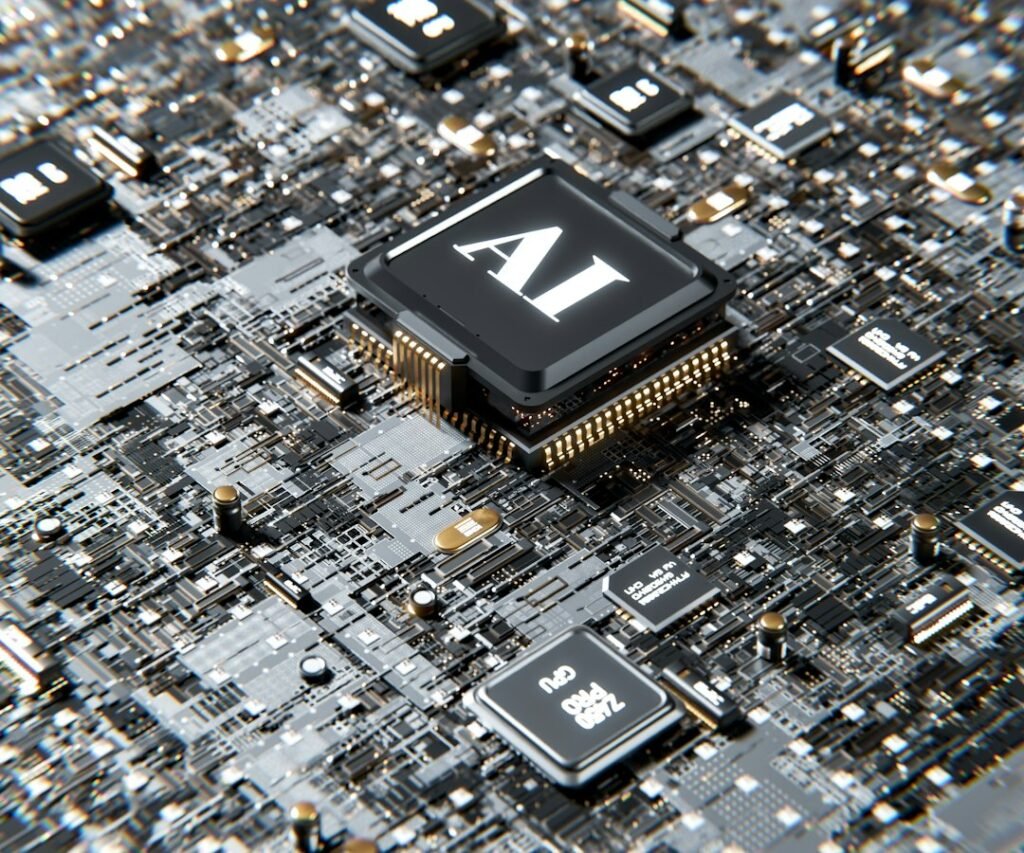
Artificial intelligence stopped being a Silicon Valley story some time ago. In 2026 the most interesting founders are as likely to be in Bengaluru, Cape Town, Barcelona, Helsinki or Sydney as in San Francisco, and they are building for problems that the big laboratories overlook: courtrooms in fifteen Indian languages, malnutrition in hospital wards, battery-free climate data for African farmers, and robots that work inside live factories. Several of them raised the largest rounds their countries have ever seen. Others were recognised by TIME and Forbes for work that had not yet made the business pages.
This article profiles ten of them. They are not the names on magazine covers. They are the founders whose companies crossed a threshold in the last eighteen months, whether a Series A, an FDA clearance, a unicorn valuation or a TIME100 listing, and whose decisions in the next eighteen will shape how AI is actually used around the world.
Meet the founders proving that the next generation of AI is being built everywhere.
1. Siddharth Shankar Tripathi: Voice Agents for a Billion Callers
Siddharth Shankar Tripathi co-founded Ringg AI in Bengaluru in 2023, originally as DesiVocal, a text-to-speech company, before pivoting to enterprise voice agents that handle customer calls end to end. The platform now processes around 20 million call attempts a month in ten Indian languages plus English, Arabic, Spanish, French, German and Bahasa, with roughly three-quarters of conversations fully automated.
Cred was Ringg’s first customer, and the roster now includes Flipkart, Practo, Groww, Policybazaar and Shell, with the agents running across 1,200 Practo clinics. In January 2026 the company raised a USD 5.5 million Series A led by Arkam Ventures, and in August 2026 Peak XV extended the round by USD 10 million, taking it to USD 15.5 million. Angel investors include Cred founder Kunal Shah.
Tripathi has said Ringg is positioning itself as a platform for agents that bring outcomes or get things done, not just talk. With pilots underway in the Middle East and North America, it is one of India’s most closely watched voice-AI exports.
2. Utkarsh Saxena: AI for Six Thousand Courtrooms
Utkarsh Saxena was a Supreme Court law clerk to Justice D.K. Jain before studying at Harvard Law School and the Kennedy School and taking up an MIT fellowship. In 2023 he co-founded Adalat AI with Arghya Bhattacharya to give Indian courts speech recognition in more than 15 Indian languages, plus case management, free of charge.
The non-profit’s tools are now used in more than 6,000 courtrooms across 11 states. Kerala runs it statewide, Sikkim’s courts are fully digitised, and an Andhra Pradesh rollout is underway. In August 2026, TIME named Saxena to its TIME100 AI list, and Y Combinator selected Adalat for its autumn batch, the first non-profit the accelerator has backed in nearly five years and the first Indian-founded one.
Saxena has described a justice system in which the process itself had effectively become the punishment. Adalat’s answer is to cut the time a judge spends on dictation and paperwork so that cases move. Few AI founders anywhere can point to a public-service footprint this large.
3. Josiah Meyer and Jemima Meyer: Catching What Hospitals Miss
Siblings Josiah Meyer and Jemima Meyer founded Healthleap in South Africa in 2022, starting with a clinical nutrition tool for dietitians. The company’s AI now scans inpatient records every night to flag patients likely to have undiagnosed malnutrition or delirium, conditions that lengthen stays and worsen outcomes, and hands the findings to clinicians for review.
In October 2026, Healthleap announced USD 38 million in funding: a USD 8 million seed co-led by Sequoia and First Round, and a USD 30 million Series A led by Hummingbird Ventures. The company is in more than 50 hospitals, up from three a year earlier, with revenue up more than tenfold, and its customers include Penn Medicine, Cedars-Sinai, Intermountain, Houston Methodist and Emory. Penn’s malnutrition programme reported USD 23.8 million in annualised impact.
Josiah Meyer, the chief executive, has said that every customer to date has seen a hard return of at least five times. With Jemima leading revenue, Healthleap is an African-founded company selling to America’s most demanding hospitals, and winning.
4. Kate Kallot: Data Sovereignty for the Global South
Kate Kallot grew up in France after her family fled the Central African Republic, and worked at Intel, Arm and Nvidia before founding Amini in Nairobi in 2022. Amini aggregates environmental data from more than 1,000 sources to predict crop yields and climate risk for the parts of the world where such data has never existed, and its work has reportedly cut farmers’ insurance costs in East Africa by 30 percent.
In December 2025, TIME honoured Kallot at its TIME100 Impact Awards in Abu Dhabi, two years after naming her to its inaugural TIME100 AI list. Amini has partnered with the government of Barbados to deploy shipping-container micro data centres, with six more countries planned, and raised a USD 4 million seed round.
Kallot defines AI sovereignty in four parts, beginning with the power to control your data, your compute and your models. In a year when every government is talking about sovereign AI, she is one of the few founders building it for countries that cannot buy it.
5. Carla Gómez Cano: Europe’s Largest Robotics Series A
Carla Gómez Cano co-founded THEKER Robotics in Barcelona in 2022 with engineer Jiaqiang Ye Zhu to build AI-native industrial robots for logistics, retail, food and beverage and waste management. The company’s robots already operate inside Inditex’s live production facilities, a customer and investor whose standards leave little room for demonstration projects.
In June 2026, THEKER raised a USD 85 million Series A led by CRV, with Samsung, LVMH, Cathay Innovation, 20VC and Henkel Ventures joining and Inditex and Kibo returning, following an EUR 18 million seed in July 2025. The company calls it Europe’s largest robotics Series A, and total funding now stands at around USD 106 million. Gómez Cano, 27, was named to Forbes’ 30 Under 30 Europe list for AI in 2026.
She has said the founders never wanted to build a research lab; they wanted to solve real problems. With a team targeting 100 people by early 2027, THEKER is Spain’s strongest claim to a seat at the robotics table.
6. Ruben Bryon: A European AI Cloud
Ruben Bryon founded DataCrunch in Helsinki in 2020 and rebranded it as Verda in November 2025. The company runs a full-stack AI cloud on GPU data centres in Finland powered entirely by renewable energy, and has grown to around 250 staff from more than 40 nationalities, with offices now open in London and San Francisco.
In September 2026, Verda announced USD 189 million in funding led by Emergence Capital, including an oversubscribed Series B, with MUFG Innovation Partners, Supermicro, Varma, Lifeline Ventures and Tesi participating. The round made Verda a unicorn and took total funding past USD 450 million, alongside a EUR 22 million loan from the Nordic Investment Bank. Annualised revenue reached USD 165 million in July.
Bryon has said the company’s north star is to build the first true tech company in Europe. At a time when the continent is anxious about depending on American compute, a Finnish AI cloud with nine-figure revenue is a meaningful answer.
7. Suchi Saria: The First AI Cleared to Warn of an Emergency
Suchi Saria is a Johns Hopkins professor and director of its AI and Healthcare Lab, and in 2018 she founded Bayesian Health as a university spinout after losing a nephew to sepsis the year before. The company’s sepsis early-warning system continuously monitors hospital patients and alerts clinicians before the condition is clinically suspected.
In May 2026, the US Food and Drug Administration cleared the system, which TIME described as the first continuous AI monitor permitted to warn clinicians of a medical emergency. Early data from Cleveland Clinic showed 46 percent more sepsis cases identified, ten times fewer false alerts and warnings arriving seven times more often before antibiotics. MemorialCare and the University of Rochester also use it. In August 2026, Saria was named to the TIME100 AI list.
Saria has explained that pre-suspicion screening is what creates lead time, and lead time is what saves lives in sepsis. Bayesian Health raised USD 15 million from Andreessen Horowitz in 2021, and its FDA milestone sets a regulatory precedent the whole field will follow.
8. Lukas Saari: Europe’s Clinical Scribe
Lukas Saari co-founded Tandem Health in Stockholm in 2023 with Oscar Boldt-Christmas and Oliver Astrand to build an AI scribe that listens to consultations and drafts the clinical record. The product is used by around 10,000 care organisations across 14 European markets, with the UK’s NHS its largest, and is CE-marked as a Class IIa medical device under EU regulation.
In September 2026, Tandem raised a USD 100 million Series B led by the EU-backed Scaleup Europe Fund, following a USD 50 million Series A in 2025, with Kinnevik and Northzone among its backers. Total funding is around USD 160 million and the team numbers about 170. A peer-reviewed study found the product cut documentation time by 29 percent and raised clinician job satisfaction by 30 percent.
Saari has argued that Europe should be setting the standard for how AI enters healthcare, not adopting someone else’s. Tandem is the clearest evidence yet that a European health-AI company can scale on European terms.
9. Kunal Vankadara: Compliance at the Speed of Marketing
Kunal Vankadara co-founded Haast in Sydney in May 2023 with Liam King and Jason Watling to build AI agents that check marketing and communications for regulatory compliance before they go out, a problem that costs retailers, banks and telecoms both fines and time. The company has since moved its headquarters to New York while keeping its engineering roots in Australia.
In April 2026, Haast raised a USD 12 million Series A led by Peak XV with DST Global, alongside existing investors Airtree, Aura and Black Sheep. Revenue grew four and a half times in 12 months with no customer churn, according to the company, and its clients include Fortune 500 companies. Haast was featured on Forbes’ 30 Under 30 Asia list for 2026.
Vankadara has said enterprises should not have to choose between moving fast and staying compliant. In regulated industries, that is a large and underserved promise.
10. Elena Zhong: Study Tools for a Generation
Elena Zhong left NYU Stern after her first year in 2023 to co-found Thetawave AI in Beijing with her high-school classmate Li Wenxuan. The app turns lectures, videos, documents and notes into flashcards, quizzes and summaries for university students, and found its first audience among Chinese students studying abroad before growing at home.
Thetawave has raised more tha USD 7 million from BAI Capital, Hillhouse Ventures, the MBA Fund and MiraclePlus, and reported passing USD 1 million in annual recurring revenue within nine months of launching paid subscriptions, with 85 percent second-month retention. In May 2026, Forbes named Zhong to its 30 Under 30 Asia list.
Zhong’s advice to other young founders is to practise on your own, because otherwise the experience will always belong to others. Thetawave is a reminder that some of AI’s most profitable early uses are the least glamorous: helping students pass exams.
Conclusion
The ten founders in this article come from India, South Africa, Kenya, Spain, Finland, the United States, Sweden, Australia and China, and between them they raised close to half a billion dollars in the past eighteen months while winning recognition from TIME, Forbes and the FDA. What they share is a refusal to wait for the frontier labs to solve their problems. They are building AI for courts, hospitals, farms, factories and classrooms, in the languages and under the rules of the places they serve. That, more than any model benchmark, is what shaping the future looks like in 2026.
Also Read