UAE investment in Greece: €15bn pledge, €12.75bn deals
Abu Dhabi pledges €15bn more UAE investment in Greece as 18 deals worth €12.75bn are signed in Athens, spanning AI, clean energy, ports and healthcare.
 Layla Al Mansoori
◆24 October 2026
◆4 min read
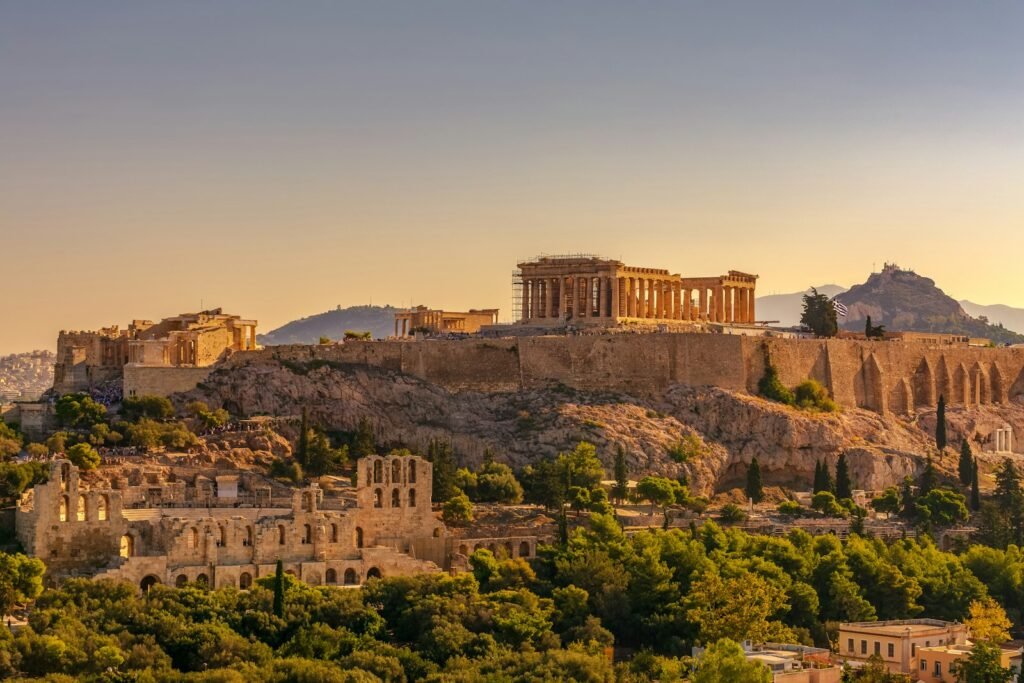
The UAE and Greece announced 18 agreements worth €12.75bn ($14.3bn) at a strategic forum in Athens on Thursday, as Abu Dhabi pledged a further €15bn (about $16.8bn) of UAE investment in Greece.
The deals were unveiled at the UAE-Greece Strategic Forum, held during an official visit to Greece by Sheikh Khaled bin Mohamed bin Zayed Al Nahyan, Crown Prince of Abu Dhabi. Greek Prime Minister Kyriakos Mitsotakis attended part of the forum alongside the Crown Prince, the Abu Dhabi Media Office said.
The 18 memoranda of understanding, agreements and commercial partnerships cover digital infrastructure, advanced technology and artificial intelligence, renewable and clean energy, industry, logistics, transport and ports, healthcare, life sciences and food security, according to state news agency WAM. Neither government has published a breakdown of the agreements by company or value.
€15bn pledge builds on 2022 UAE investment in Greece
The additional €15bn will be channelled through a joint investment initiative that the two countries set up in May 2022 with an initial value of €4bn (about $4.5bn). The Abu Dhabi Media Office said the expanded commitment is meant to deepen long-term economic ties and widen cooperation on shared strategic and development priorities.
Mitsotakis told the forum that the original €4bn target for direct UAE investment had already been exceeded, citing Masdar and PureHealth as examples, Greek Reporter reported. He also presented Greece as a European entry point for the India-Middle East-Europe Economic Corridor, with the UAE as a partner in transport, energy and digital links.
Masdar’s Terna Energy deal set the template
The largest single UAE investment in Greece so far came from Masdar, Abu Dhabi’s clean energy company. In November 2024 it agreed to buy a 70% stake in Terna Energy at an enterprise value of €3.2bn (about $3.6bn), and in 2025 it took full ownership after a tender offer, according to Reuters.
Terna Energy gave Masdar a portfolio of wind, solar, hydro and storage assets in Greece, Bulgaria and Poland, including the Amfilochia pumped-storage project now under construction. PureHealth, the Abu Dhabi healthcare group, is the other UAE investor Mitsotakis singled out, though he gave no detail of its Greek holdings.
Dr Thani bin Ahmed Al Zeyoudi, UAE Minister of Foreign Trade, said the priority was to turn the momentum into productive projects and high-quality investment, with the private sector central to converting opportunities into jobs. The UAE delegation also included Dr Sultan Ahmed Al Jaber, Minister of Industry and Advanced Technology and ADNOC Managing Director and Group CEO, and Mohamed Hassan Alsuwaidi, Minister of Investment, WAM reported.
Why it matters for Gulf investors
The Athens package is the latest sign that Abu Dhabi’s sovereign and state-linked investors are directing capital towards southern Europe, where energy transition, ports and digital infrastructure assets fit their mandates. Greece offers access to EU markets, a growing renewables pipeline and a maritime sector with long-standing Gulf ties.
For Gulf companies, the sector list signals where the next round of bilateral deals is likely to land: data centres and AI, clean power and storage, port logistics and food supply chains. The forum included investment-matching sessions and business-to-business meetings designed to pair UAE and Greek firms, WAM reported.
The outbound flows contrast with the recent pattern in Gulf equity markets, where foreign investors pulled a record $2.3bn from GCC stocks in the third quarter. Gulf state investors, by contrast, have kept deploying capital abroad, a theme that runs through our regional economy coverage.
What happens next
The two governments have not set a timeline for deploying the €15bn, and the 18 agreements include non-binding memoranda alongside commercial contracts, so the headline figure is unlikely to translate directly into near-term capital flows. Investors will watch for named transactions from Abu Dhabi’s state-owned investment vehicles to gauge how quickly commitments become projects.
Mitsotakis identified renewable power, energy storage and liquefied natural gas as priority areas, along with AI applications in government and agribusiness, Greek Reporter reported. Details of individual agreements will depend on disclosures by the signatories themselves.