ACWA Power Bash II wind farm: $226m financial close
ACWA Power Bash II, a 300MW Uzbek wind farm, reaches financial close on SAR847.5m ($226m) of up to 21-year debt from ADB, AIIB and Standard Chartered.
 Layla Al Mansoori
◆16 November 2026
◆4 min read
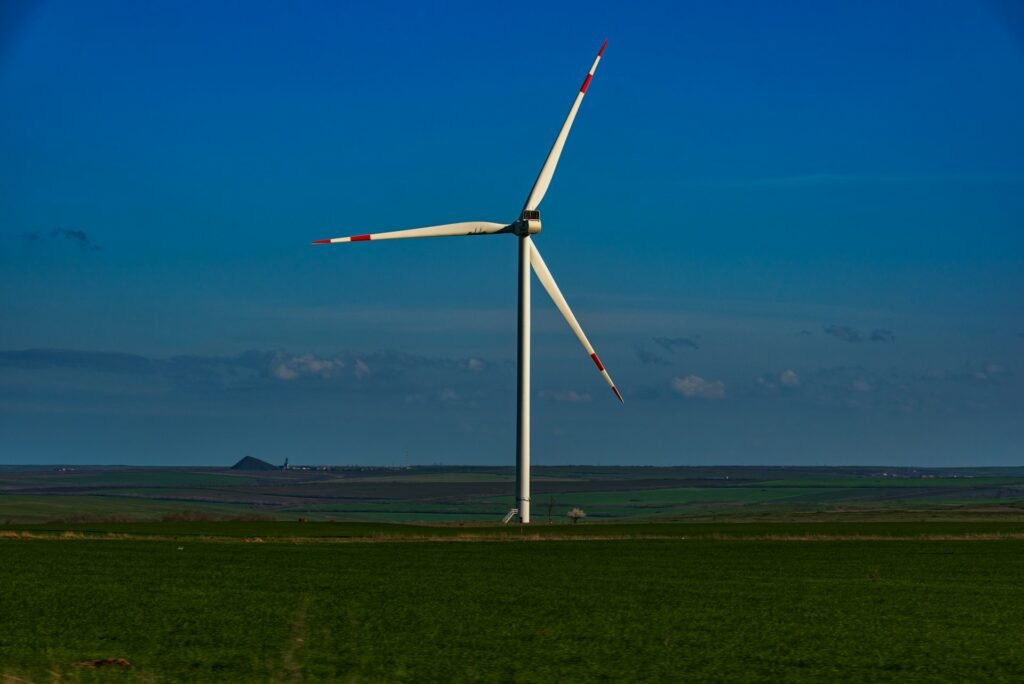
ACWA Power Bash II, a 300MW wind farm in Uzbekistan’s Bukhara region, has reached financial close on SAR847.5 million ($226 million) of debt, the Saudi developer said in a Tadawul filing on Sunday.
The long-term financing runs for up to 21 years and comes from a group of international lenders: the Asian Development Bank (ADB), the Asian Infrastructure Investment Bank (AIIB) and Standard Chartered Bank, according to the statement to the Saudi Exchange (Tadawul) dated 15 November.
ACWA Power said its guarantees under the package are limited to its standby equity commitment and reserve account obligations, a structure the company described as standard for limited-recourse renewable energy projects in Uzbekistan.
What the ACWA Power Bash II financing covers
The $226 million of senior debt covers more than two-thirds of the project’s total cost, ACWA Power said when the loan agreements were signed in May. The plant, in the Gijduvan district of Bukhara, sits next to the original Bash wind farm, which ADB co-financed in 2023, and will sell its output to the National Electric Grid of Uzbekistan under a 25-year power purchase agreement.
According to a May 2026 ADB release, Bash II will consist of 39 turbines rated at up to 8MW each, a new 35/500kV substation and roughly 1.5km of overhead line to connect the site to Uzbekistan’s national grid.
ADB signed its own $116 million package for the project in Samarkand on 6 May 2026. That package comprised a $50 million loan from the bank’s ordinary capital resources, $41 million mobilised from commercial lenders with ADB acting as mandated lead arranger and bookrunner, and $25 million from the Leading Asia’s Private Infrastructure Fund 2 (LEAP 2).
ADB also said it was acting as environmental and social coordinator for AIIB and Standard Chartered, which it described as parallel lenders. Sunday’s Tadawul statement names the same three institutions now that the debt package has closed.
LEAP 2 is an ADB-managed fund established in 2023 with a $1.5 billion commitment from the Japan International Cooperation Agency. It backs private-sector infrastructure in ADB’s developing member countries.
A growing Central Asian portfolio
Uzbekistan has become one of ACWA Power’s key markets outside Saudi Arabia as the government opens its power sector to foreign developers. ADB said it has financed several of the company’s projects in the country, including the 500MW Bash and 500MW Dzhankeldy wind farms, the 200MW Nukus-2 wind and battery storage project, and the Samarkand 1 and 2 solar plants with storage.
Counting Bash II and other ADB-financed wind projects, ADB said the wind capacity it has supported in Uzbekistan now exceeds 2GW. Isabel Chatterton, ADB’s Director General for Private Sector Operations, said in May that the project would expand Uzbekistan’s clean energy capacity, support grid stability and cut carbon emissions.
Mohammad Abunayyan, ACWA Power’s founder and chairman, said at the time that the successful structuring and financing of Bash II was evidence of Uzbekistan’s commitment and confirmed the commercial viability of large-scale wind power in the region.
ADB expects construction to generate at least 800 jobs and the operating plant to support at least 25 permanent positions. The project also includes measures to bring more women into the renewable energy workforce, such as technical study tours of wind farms for female students and graduates.
Why it matters for investors
ACWA Power is listed on Tadawul under the ticker 2082 and, according to ADB, develops, owns and operates power and desalination assets in 15 countries. ADB put the company’s market capitalisation at about $35 billion as of March 2026.
Financial close usually marks the point at which a project moves from development into full construction, so Sunday’s announcement removes a key uncertainty for ACWA Power Bash II. The limited-recourse structure also keeps ACWA Power’s balance-sheet exposure contained as it grows abroad, where its recent moves include the $4 billion US power platform it is targeting with EIG and a SAR1.79bn water agreement with DEWA for Hassyan.
The deal also arrives as the Saudi renewables market expands at home. The Saudi Power Procurement Company recently opened Round 8 of its renewables tender, offering 3,200MW of new capacity.
Shares in ACWA Power closed at SAR165.20 on Sunday, down 1.09%, according to Arab News, on a day when the Tadawul All Share Index fell 0.66% to 10,258 points.
ACWA Power has said it expects Bash II to begin commercial operation in the second half of 2027. Once running, the company says, the plant will supply more than 336,000 households and avoid about 475,000 tonnes of carbon dioxide emissions a year.
Investors will also watch for the company’s next quarterly update, where Bash II is likely to appear in its construction pipeline. The full Tadawul statement is available via Argaam’s report of the disclosure.